lessons from the LEAD Uganda projectAcross Uganda’s refugee settlements, local and refugee-led organisations are shaping how localisation is understood and practiced.
Through the LEAD Uganda project, national NGOs, refugee-led organisations (RLOs), and women-led and women’s rights organisations (WLOs/WROs) are working across seven refugee settlements to strengthen equitable partnerships, inclusion, and shared leadership. Supported by Woord en Daad with funding from the Dutch Ministry of Foreign Affairs, the project has evolved into a space where local actors are actively influencing project direction, partnership models, and learning processes. Now in its second year, LEAD is testing what it means to shift decision-making, knowledge, and ownership closer to the communities most affected.
Co-creation as a governance approach
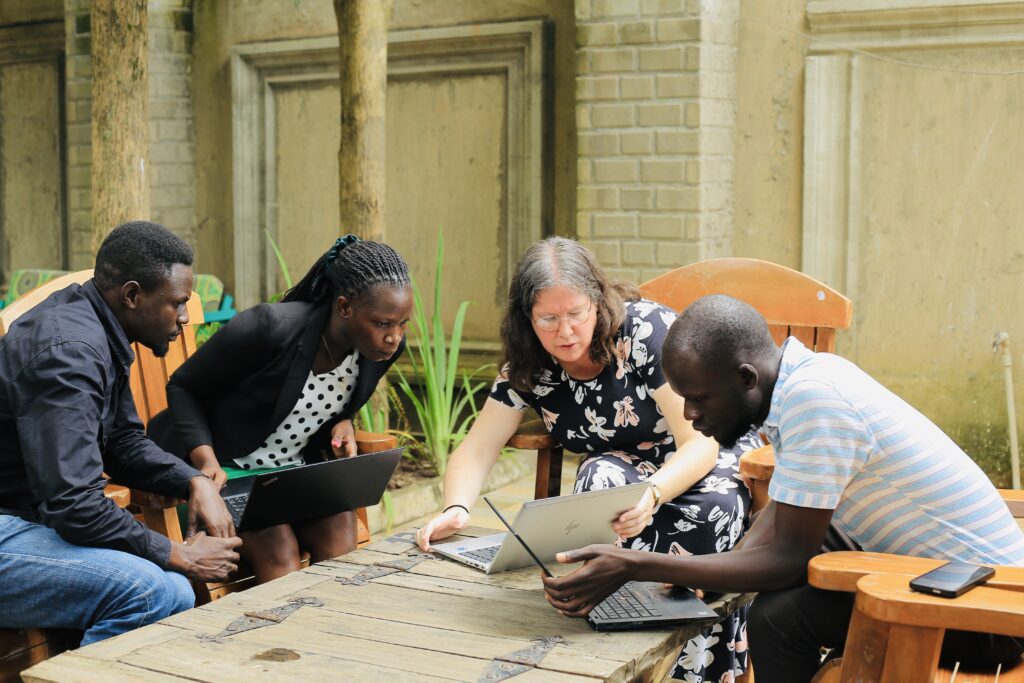
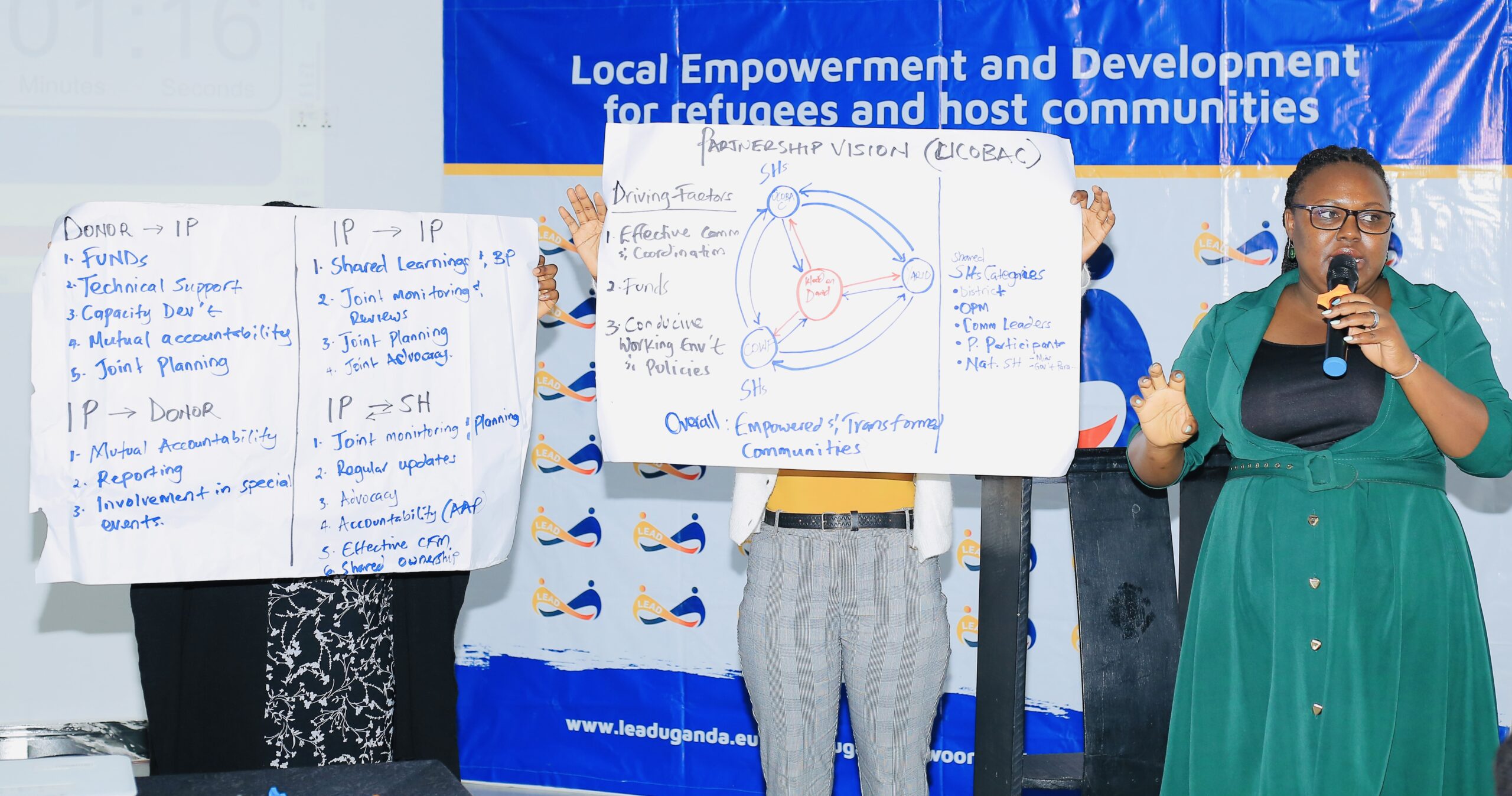
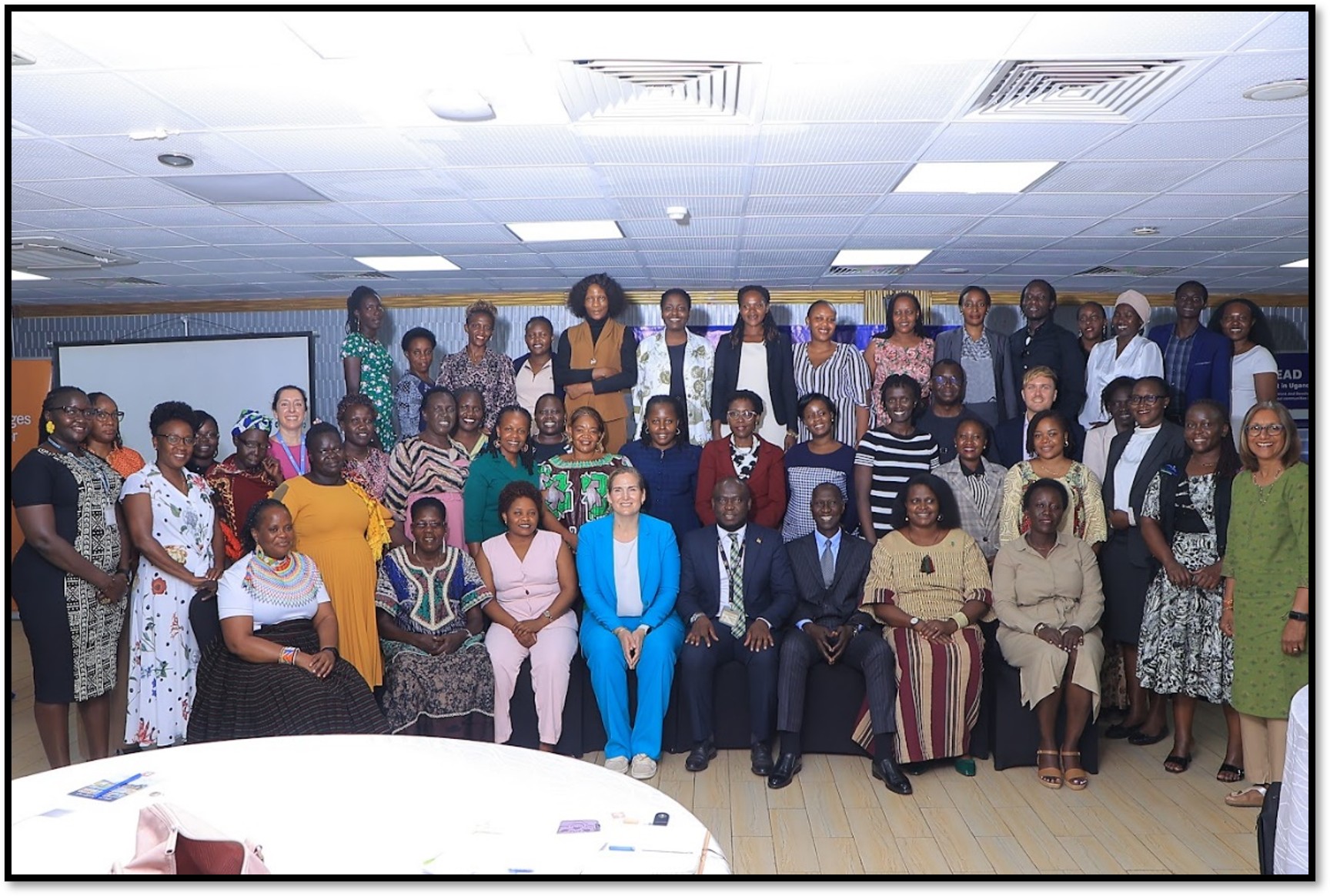
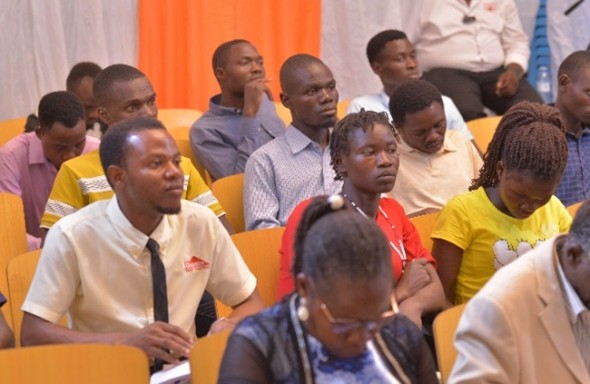
At the centre of the LEAD project is co-creation: an approach that goes beyond workshops to shape how decisions are made and shared. During the 2025 co-creation workshop held in October, partners came together to reflect, challenge, and redefine priorities based on lived realities. Participants collectively explored:
- How to strengthen business sustainability beyond project timelines
- How to expand direct access to funding for local actors
- How partners can better document and communicate their own impact
- How refugee and host communities can meaningfully influence policy and decision-making
For many partners, co-creation represents a shift in how power is exercised.
“Localisation is not about being included in someone else’s plan it is about shaping the plan itself,” shared a representative from refugee-led organisation Grapes of New Hope.
This process has also enabled partners to adapt interventions in real time responding to emerging challenges such as climate shocks and shifting refugee dynamics. In this way, co-creation is functioning as a form of adaptive governance, where learning and decision-making are shared. Mutual learning.
A key insight emerging from the LEAD project is that capacity is shared, challenged, and built collectively. It cannot be transferred from an international organization onto a local organisation. Through ongoing engagement, the partners are strengthening their own systems and at the same time also influencing how international partners work. Feedback mechanisms, such as anonymous reflection sessions, have created space for honest dialogue on what equitable partnership looks like in practice. Partners highlighted strengths such as transparency and trust, while also calling for improvements in areas like communication, timely fund disbursement, and deeper investment in institutional growth. These reflections have prompted internal reflections within Woord en Daad demonstrating that localisation requires institutional change on all sides, not just at the local level.
Navigating structural challenges together
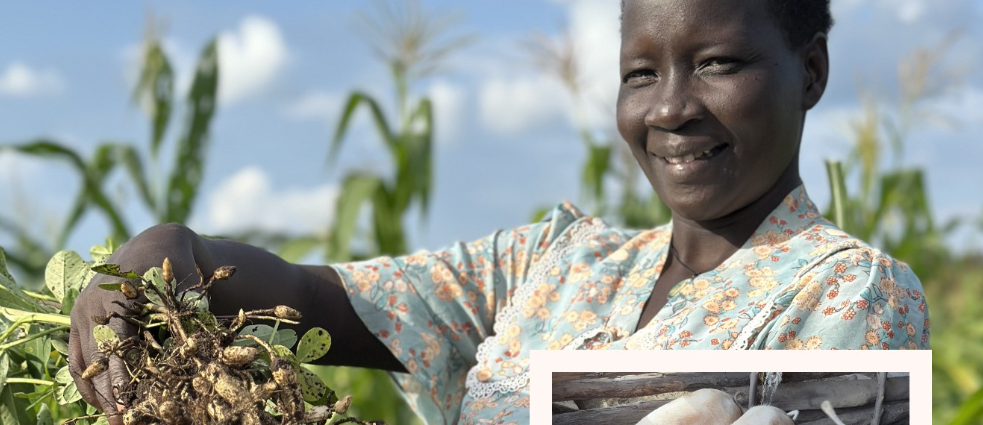
Partners continue to operate in a complex and evolving context. Climate change is affecting livelihood investments such as block farming, while access to land for agriculture remains a persistent challenge, particularly for refugees. At the same time, continued refugee influxes from the Democratic Republic of Congo, South Sudan, and Sudan are placing additional pressure on already constrained services, especially as funding cuts force some humanitarian actors to scale down. Yet local organisations are responding with adaptive strategies strengthening networks, forming advocacy alliances, and identifying practical solutions grounded in context. These experiences highlight the importance of locally driven innovation in shaping more resilient and responsive systems.
From participation to leadership
One of the emerging shifts within the LEAD project is the gradual movement from participation to leadership. Local partners are increasingly influencing programme priorities, contributing to learning processes, and shaping how impact is defined and measured. Co-creation spaces have enabled peer learning across organisations, where partners exchange approaches and adapt successful practices from one another. However, partners also acknowledge that localisation remains an ongoing process. Structural inequalities particularly around funding flows and decision-making authority continue to shape partnerships.
“We are learning that equitable partnership is not a destination. It requires continuous reflection, trust, and willingness to shift how we work,” noted a representative from women-led organisation Hamiza Development Foundation.
Rethinking equitable partnerships in practice
Experiences from the LEAD project suggest that equitable partnerships are defined by inclusion and how power, resources, and decision-making are shared.
This includes:
- Recognising local actors as knowledge holders and strategists
- Creating space for joint decision-making and adaptive planning
- Strengthening direct access to resources
- Building systems of shared accountability and learning
These shifts align with global commitments such as the Grand Bargain, the Global Compact on Refugees, and the Charter for Change but also highlight the gap between commitment and practice.
Looking ahead: localisation as a continuous process
The LEAD project offers a practical example of how partnerships can evolve when local actors are positioned at the centre of decision-making and learning. This highlights an ongoing process: one that requires confronting power imbalances, investing in relationships, and remaining open to change. Localisation, as reflected by partners, is a continuous negotiation of power, trust, and accountability. And in this process, the most important shift may not be in project design, but in who leads, who decides, and whose knowledge counts.