As the 2025 16 Days of Activism Against Gender-Based Violence conclude, Juliet Donna Eyokia, Refugee Engagement and Policy Influencing Coordinator at Woord en Daad, reflects on what we have learned from refugee settlements across Uganda and what urgent action is still required to end digital violence against women and girls.
Gender-Based Violence in Uganda: The scale behind the statistics
In times of crisis such as displacement, poverty, food insecurity, or humanitarian pressure, vulnerability to gender-based violence (GBV) increases, and digital violence adds yet another layer. Globally, intimate-partner physical or sexual violence affects nearly one in three women in their lifetime. Across Uganda, women and girls experience various forms of violence, including intimate partner violence, sexual assault, child marriage, emotional abuse, and economic exploitation. According to the 2022 Uganda Demographic and Health Survey:
- 36% of women have experienced physical violence.
- 28% of women have experienced sexual violence in their lifetime.
- 56% of married women have experienced emotional or psychological violence.
Humanitarian contexts, multiply risk
Behind these numbers are women and girls living with long-lasting scars. The burden of GBV is even heavier in humanitarian contexts, particularly in refugee settlements, where constrained resources, poverty, and weakened protection systems increase risk. Women and girls face heightened threats of rape, forced marriage, trafficking, and exploitation. Adolescent girls are especially vulnerable due to disrupted education, limited access to sexual and reproductive health services, and poverty that drives harmful coping mechanisms.
Digital violence: A growing and invisible threat
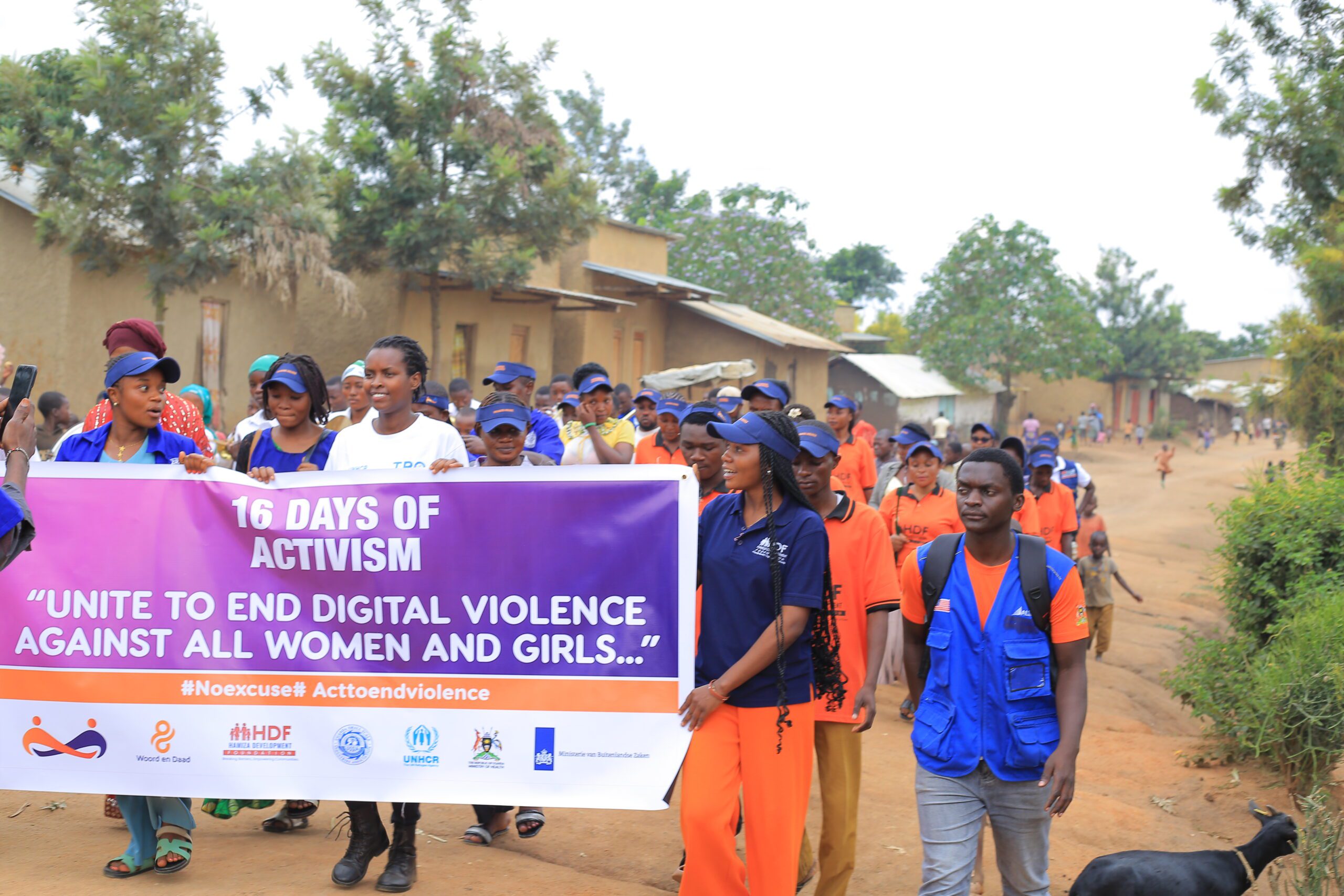
Uganda’s 2025 ‘16 days of activism against gender based violence campaign‘ anchored on the theme: ‘UNiTE to End Digital Violence Against All Women and Girls’ underscores how violence increasingly takes digital forms, including online harassment, cyber-stalking, exploitation, and other technology-enabled abuse. This creates an urgent imperative to link GBV prevention, humanitarian protection, digital safety, and social inclusion.
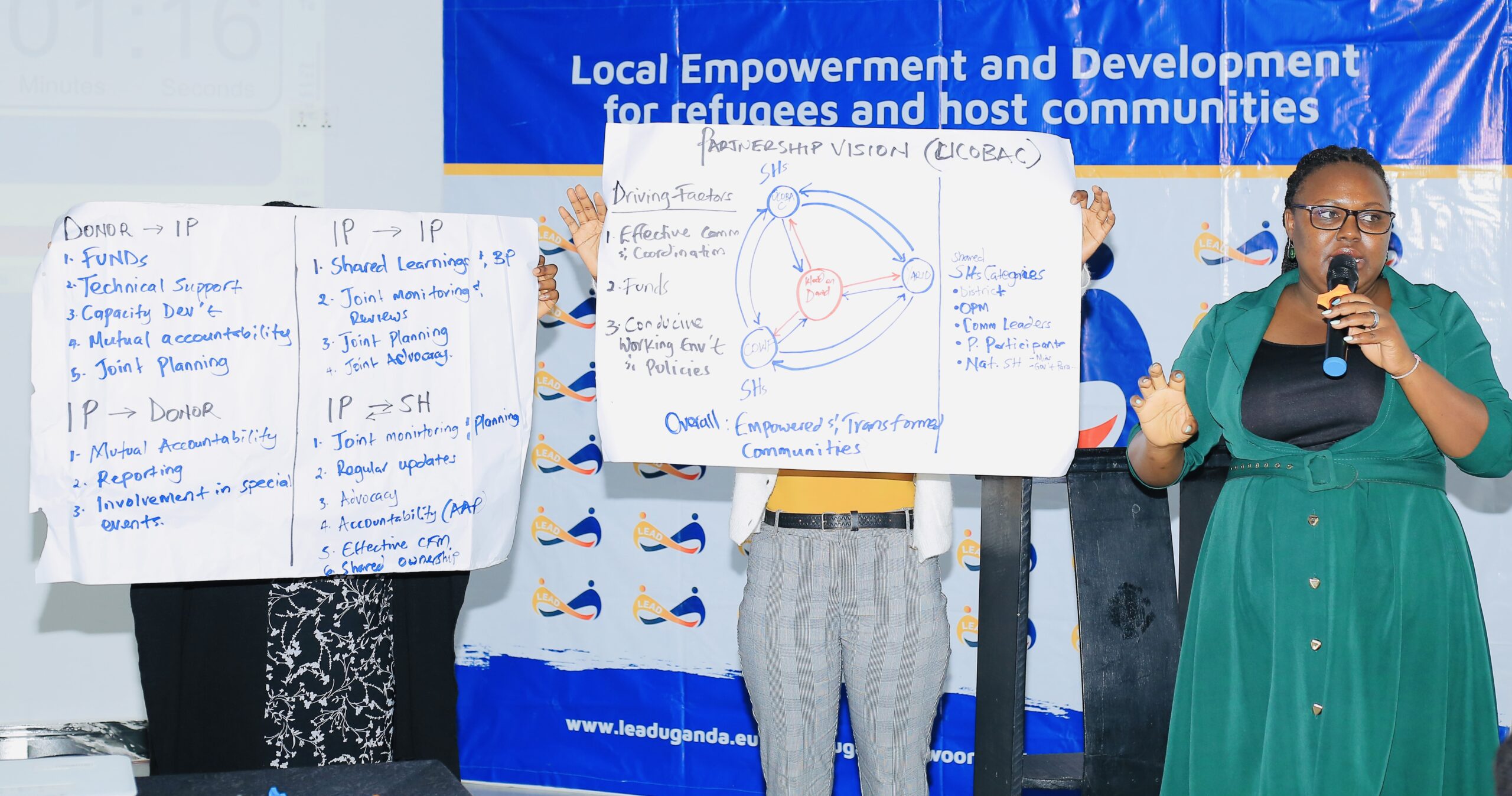
Woord en Daad partners under the Local Empowerment and Development (LEAD) project, funded by the Dutch Ministry of Foreign Affairs and working in refugee settlements including Kyaka II, Bidibidi, Nakivale, Palabek, Imvepi, and Rhino Camp, are implementing activities to address GBV among refugees and host communities alongside other partners, with support from UNHCR and OPM. LEAD partners work through existing community structures such as Refugee Welfare Councils, Local Councils, religious and cultural institutions, and youth and women’s groups to strengthen protection and GBV prevention. Activities include village-level awareness sessions on forms of GBV and reporting and referral pathways, strengthening the capacity of community structures, community barazas, and stakeholder engagement.
“Digital violence is a silent form of gender-based violence in refugee communities, often ignored, rarely reported, and deeply harmful.”
How LEAD partners are responding in refugee settlements
LEAD partners train project participants in gender-transformative approaches such as Gender Action Learning Systems (GALS), promoting gender equality, transforming harmful social norms, and shifting power imbalances at individual, household, and community levels. Partners also promote positive masculinity through engagement of men and boys to address root causes of violence and strengthen them as allies and agents of change.
In addition, LEAD partners work with local community structures, parents, and caregivers to support girls’ school enrolment and re-enrolment, and provide skills support to teenage mothers to strengthen economic empowerment.
What women and girls are telling us
During the 16 Days of Activism, partners carried out activities across refugee settlements and host communities including awareness sessions on digital violence, distribution of IEC materials, focus group discussions (FGDs) with women and girls, stakeholder engagement, digital safety education, and community mobilisation.
In Kyaka II, FGDs led by Hamiza Development Foundation (HDF) brought women and girls together to share knowledge and experiences of digital violence. Nearly all participants reported experiencing some form of digital violence, including within intimate relationships. Participants also shared that community leaders had not acted despite some cases being reported.
Progress exists, but gaps remain
Existing interventions remain inadequate due to resource constraints. Under-reporting persists due to fear of stigma, blame, and limited trust in institutions, creating a major barrier to GBV response in Uganda. At the same time, there are promising efforts from government and development partners.
Community-based safe spaces, local women’s groups, and NGOs provide psychosocial support, referrals, and protection services for GBV survivors, including in refugee settlements. Inter-agency referral networks across health, justice, and social services help link survivors to multi-sectoral support. Awareness campaigns increasingly include digital safety, reflecting that violence happens online and survivors need safe reporting channels. Several efforts also emphasise inclusion to reach marginalised groups, including persons with disabilities, young women, and adolescents. These are essential foundations, and they require stronger resourcing, coordination, and adaptation to address evolving digital risks and the structural inequalities that intensify vulnerability in refugee and host communities.
What needs to be done?
For Government and policymakers
- Strengthen enforcement of existing laws, including fair and consistent application of provisions under the Computer Misuse Act to deter cyber-harassment, cyber-stalking, hate speech, and misuse of social media..
- Explicitly recognise technology-facilitated gender-based violence (TFGBV) in national legislation, including the Sexual Offences Bill 2024, to ensure cyberbullying, non-consensual intimate image sharing, online sexual exploitation, and other digital abuses targeting women and girls are clearly defined and prosecutable.
- Ensure safe reporting & referral pathways for survivors of digital violence, including mechanisms for legal support, psychosocial support, and protection.
- Promote digital literacy, privacy rights & online safety awareness including in schools, refugee settlements, and vulnerable communities, through public sensitisation on safe internet practices, online consent, and how to recognise and report abuse.
- Invest in ICT infrastructure and data protection safeguards so women, girls and refugees can use digital tools safely and access support services without fear of exposure or retaliation.
- Monitor and evaluate law- and policy-implementation, to ensure protection measures reach those most at risk, and strengthen data collection to inform future policy and programming.
For NGOs, civil Society and community groups
- Strengthen community safe spaces and mobile outreach teams, ensuring survivor-centred services that address both offline and digital violence risks.
- Scale up digital-safety education, particularly for young people and women, focusing on safe internet use, consent, privacy protection, and clear reporting pathways.
- Prioritize the inclusion of marginalized groups including persons with disabilities, refugees, older women, and adolescents across planning, prevention, and response interventions.
- Advocate for integration of digital-violence indicators into GBV data systems, humanitarian assessments, and monitoring tools to improve visibility and accountability.
For individuals and communities,
- Raise awareness and speak openly about digital violence as real and harmful violence, challenging norms that silence or control women and girls online.
- Support survivors with empathy and confidentiality: believe them, link them to appropriate referral pathways (health, legal, psychosocial), and protect their privacy.
- Demand accountability and safer digital spaces by calling out abuse, advocating for stronger policies and services, and engaging in community-led prevention and protection initiatives.
A call to act beyond the 16 Days
The 2025 16 Days of Activism theme “UNiTE to End Digital Violence Against All Women and Girls” is a reminder that violence today also lives in our screens, networks, and digital lives. In Uganda’s refugee settlements and host communities, responding to this call means protecting dignity and rights at every level, from policy to community structures, from offline safe spaces to online safety.
Woord en Daad calls on Parliament to accelerate adoption of the Sexual Offences Bill 2024 with clear recognition of technology-facilitated gender-based violence, ensuring cyberbullying, non-consensual image sharing, and online harassment are explicitly defined and punishable. We urge government agencies, including the Uganda Communications Commission and law enforcement, to strengthen enforcement of existing provisions under the Computer Misuse Act so digital violence is treated with the seriousness it demands.
We also call for safe, accessible, and confidential reporting channels so women, girls, and other vulnerable groups can report online abuse without fear of stigma or retaliation. Government, civil society, and community actors can strengthen prevention by prioritising digital literacy and online safety education in schools, refugee settlements, and community spaces. Policymakers can accelerate protection by investing in secure digital infrastructure and stronger data protection safeguards so survivors can access online services safely and privately. Finally, continuous monitoring and evaluation of digital violence trends and responses will keep interventions evidence-based, survivor-centred, and responsive to evolving digital realities.
Ending digital violence requires sustained political will, resourced systems, and community-level courage long after the 16 Days end.

Sources
- Uganda Bureau of Statistics (UBOS) & Ministry of Health (MoH). Uganda Demographic and Health Survey (UDHS) 2022.
- UNHCR Uganda. GBV and Protection Updates (2024–2025).
- Inter-Agency GBV Working Group Uganda. Humanitarian Situation Reports (2024–2025).
- UNFPA Uganda. Digital Safety and GBV Briefs (2023–2025).