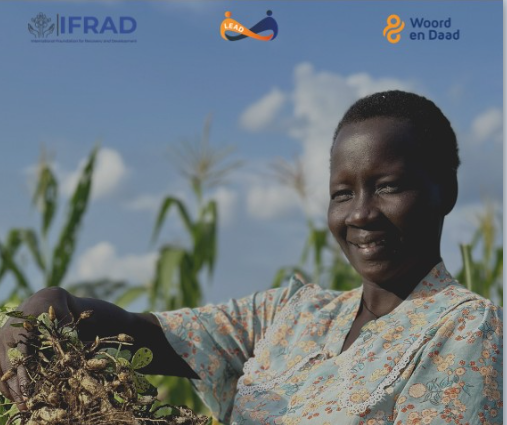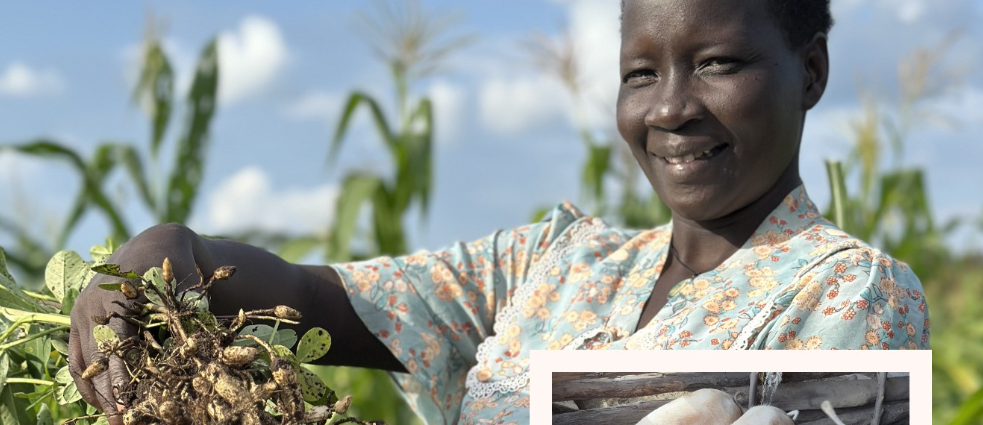
When Uttu Mary harvested 800 kg of groundnuts from the 95 kg of seed she had planted, the result went far beyond one successful farming season. Her experience shows how LEAD partner IFRAD is combining skills, group-based support and access to productive resources to help refugee and host communities build more sustainable livelihoods.
Mary, a 43-year-old mother of five in Kiryandongo District, had wanted to develop farming into a business for years. She knew there was a market for groundnuts, but lacked the capital and affordable credit needed to invest.
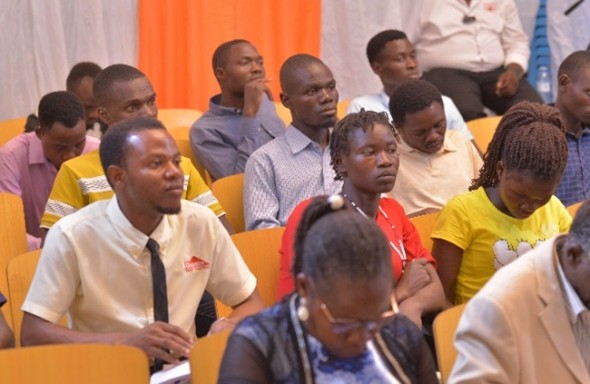
Through the LEAD programme, International Foundation for Recovery and Development (IFRAD) brought community members together in farmer groups and provided training in business planning, savings and farm management. The group also received an initial package of groundnut seed and agricultural inputs.
What happened next illustrates an important part of the LEAD approach. When access to communal land became difficult, Mary found another route. She negotiated with a neighbour to rent land on credit and borrowed 95 kg of seed from her farmer group, committing to return the seed after harvest. Rather than waiting for the project to solve each constraint, she could draw on her new knowledge, relationships and group resources to act herself.
The harvest generated UGX 1 million in net proceeds. Mary repaid the land rental and seed loan, retained seed for the next season, paid school fees for her five children and reinvested in her livelihood. She has since rented more land and started poultry and piggery activities to diversify her income.
This is the wider change LEAD seeks to enable: local partners building structures through which people gain skills, access resources, share risk and reinvest what they earn. When those capacities remain within communities, one project intervention can support repeated cycles of livelihood development.
For IFRAD, Mary’s experience also provides practical learning about what participants need to move from training to enterprise: business skills, an initial productive asset, access to peer support and enough flexibility to respond when circumstances change.
Mary is already thinking beyond her first harvest. Her ambition is to expand her farming further and reach larger commercial markets.
“If it weren’t for IFRAD and the LEAD project, I would still be lamenting for wishes to be horses.”